
IB ECONOMICS Real world examples (rwe's)
Need some real-world examples for IB Economics?
Exploring IB Economics RWE’s Through U.S. Healthcare Reform (Obamacare)
In the IB Economics course, real-world examples play a powerful role in helping students bridge the gap between theory and application. IB Economics real world examples (RWE’s) deepen understanding of key topics like market failure, government intervention, inequality, and merit goods. Using IB Economics RWE’s like the Affordable Care Act (ACA), students and teachers can develop more compelling arguments, produce stronger IA’s, and elevate evaluation skills. This policy stands out as one of the most ambitious U.S. efforts to increase equity in healthcare access, offering vital lessons for anyone studying IB Economics.
Affordable Care Act (USA): Merit Goods
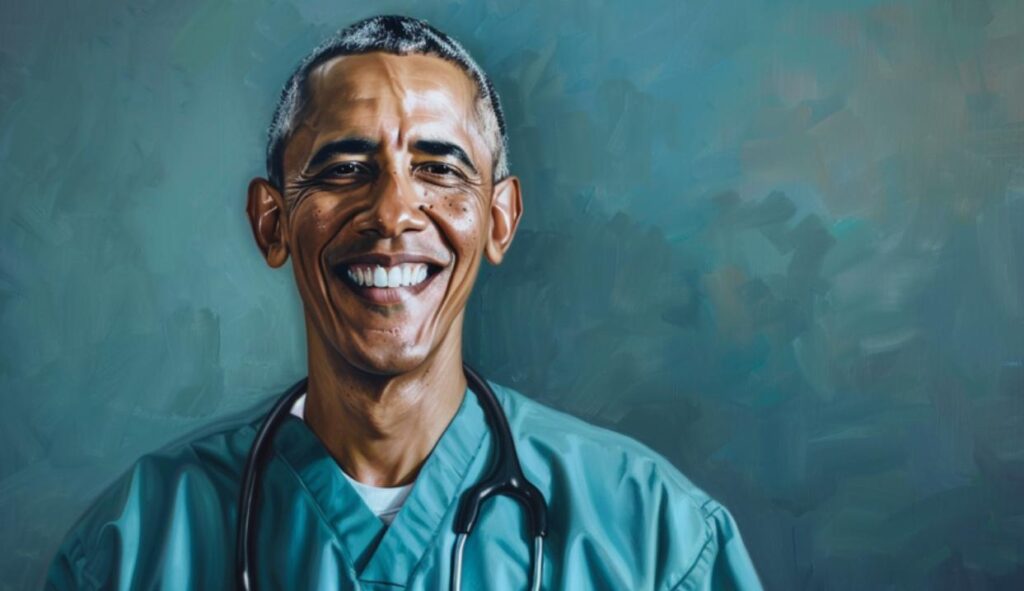
The Affordable Care Act (ACA)—commonly referred to as ObamaCare—is an example of a government policy that tackles the under-provision of merit goods using fiscal policy. It represents a large-scale attempt to address market failure in the healthcare sector by expanding coverage, improving efficiency, and reducing inequality.
Background Information
Signed into law by President Barack Obama in 2010, the Affordable Care Act aimed to transform the U.S. healthcare system. Prior to its implementation, millions of Americans lacked insurance due to high costs and denial of coverage for pre-existing conditions. The ACA introduced major reforms, including the expansion of Medicaid, subsidies for lower-income households, mandatory health insurance coverage, and the creation of state insurance exchanges. The policy emerged in response to the 2008 financial crisis and rising healthcare inequality, positioning itself as a cornerstone of Obama’s domestic agenda to improve healthcare access and address a long-standing market inefficiency.
Economic Theory and Policy Aims
The ACA is grounded in the economic theory of market failure, particularly the under-provision of merit goods—in this case, healthcare. Left to the free market, too few people consume healthcare, especially preventative services, leading to negative long-term outcomes for society. The government intervened using a mix of regulation and fiscal tools, such as subsidies for private insurance, taxes on high-end insurance plans, and expanded Medicaid funding. The policy also addressed information asymmetry by mandating clear coverage rules and limiting insurers’ ability to reject applicants. The overarching aim was to boost equity, efficiency, and access within the healthcare system.
Evaluation of the Policy
The ACA achieved notable success by cutting the U.S. uninsured rate from over 16% in 2010 to below 10% by 2016. It improved access to preventive care and reduced racial disparities in healthcare access. However, several challenges emerged: premiums rose in some regions, insurance companies exited unprofitable markets, and partisan political opposition limited Medicaid expansion in conservative states. Some unintended consequences included labor market distortions as small businesses adjusted employment to avoid coverage mandates. Despite these setbacks, the ACA represents a substantial policy experiment in large-scale government intervention to correct market failure and promote social welfare.
Learn with IB Economics RWE’s
This page is your go-to resource for IB Economics real world examples! The Affordable Care Act (ACA) is a brilliant IB Economics RWE for students and teachers looking to strengthen analysis, deepen evaluation, and connect theory to reality. Understanding policies like the ACA helps you boost exam performance and develop richer IA content. You don’t need to learn every policy—but having a few of these RWE’s in your toolkit makes your IB Economics answers stand out and shine with real insight and confidence.
IB Economics RWE Scorecard: Affordable Care Act (ACA)
| Category | Score (/100) | Symbol Representation |
|---|---|---|
| 40 | ||
| 75 | ||
| 50 | ||
| 80 | ||
| 85 |
Got any other useful sites or pages for IB Economics?
A complete set of IB Economics teaching / revision resources: https://ibmonkeybusiness.site/ib-economics-resources/
Key terms / vocabulary list / glossary for IB Economics: https://ibmonkeybusiness.site/ib-economics-key-terms-glossary/
Want to broaden your horizons with some wider reading?: https://www.bbc.com/news/business/economy
Here’s a link to another great partner website: https://thecuriouseconomist.com/
IB Economics Real-World Examples (RWEs): Where Theory Meets Reality
Welcome to the ultimate hub for IB Economics real-world examples (RWEs)—where theory meets reality. Whether you’re analyzing inflation, market failures, or global trade, real-world examples (RWEs) are essential for scoring top marks in IB Economics. Economics isn’t just about models and diagrams; it’s about understanding how policy decisions shape our daily lives, businesses, and entire countries. If you want to achieve a Level 7 and master exam technique, you must know a range of real-world examples (RWEs) to justify your answers—especially in Paper 3’s 10-mark policy recommendation question. Let’s explore how microeconomics, macroeconomics, and international trade play out in real time.
Microeconomics: The Power of Supply and Demand
Ever wondered why iPhones sell out instantly, or why concert tickets for artists like Taylor Swift skyrocket in price? This is IB Economics real-world examples (RWEs) in action. The law of supply and demand explains how firms price their products, why some brands hold monopoly power, and how government policy intervenes when markets become unfair. Rent controls in New York, price ceilings on energy in the UK, and minimum wage laws in Germany are all real-world examples (RWEs) of governments stepping in to correct market distortions. If you’re recommending policy solutions in the exam, strong exam technique requires backing up your analysis with real-world examples (RWEs).
Macroeconomics: Inflation, Interest Rates, and Government Debt
Macroeconomics isn’t just about GDP numbers—it’s about policies that impact millions of lives. Post-pandemic, we saw one of the best IB Economics real-world examples (RWEs) of inflation control. Central banks worldwide, from the U.S. Federal Reserve to the Bank of England, raised interest rates to slow down overheating economies. Countries like Argentina and Turkey struggle with hyperinflation, while Japan faces long-term deflation—both cases show why policy decisions matter. Meanwhile, government debt is skyrocketing. The World Bank reports that global debt levels are at record highs, forcing policymakers to rethink taxation and spending.
Will Debt Collapse Economies?
One of the biggest policy debates today is whether rising government debt will lead to economic collapse. The U.S. national debt has surpassed $30 trillion, and developing countries like Sri Lanka have defaulted on their loans. If debt spirals out of control, interest rates rise, currencies weaken, and economies crash. Is this the inevitable result of poor policy decisions? The International Monetary Fund (IMF) warns that unsustainable debt could trigger global recessions, making fiscal policy one of the most critical economic tools in the 21st century.
Trade: Globalization, Fast Fashion, and the Debt Trap
International trade connects the world, but it also creates economic winners and losers. The fast fashion industry thrives on cheap labor from developing countries, highlighting how firms use comparative advantage. But globalization isn’t always beneficial—some countries fall into a “debt trap,” borrowing billions for infrastructure projects they can’t repay. Sri Lanka’s recent debt crisis, where unsustainable borrowing led to an economic collapse, is a perfect IB Economics real-world example (RWE) of unsound trade and fiscal policy. Governments must balance trade openness with protective measures like tariffs and subsidies, making policy decisions critical for sustainable growth.
Why You Need Real-World Examples (RWEs) for Paper 3
If you want to ace IB Economics Paper 3, strong exam technique is essential—especially for the 10-mark policy recommendation question. Examiners expect students to justify their policy choices with concrete evidence. Whether it’s inflation control, government intervention, or trade protection, the best answers connect policy theory to real-world examples (RWEs). If you’re aiming for a Level 7, your exam technique must include well-structured, policy-driven answers with precise real-world examples (RWEs).
Keep exploring, keep questioning, and apply real-world examples (RWEs) to every concept you study. Economics is happening around you—understand it, and you’ll master IB Economics.
