
IB Busines Management (IB BM)
IB BM Unit 2.5 Organisational Culture (HL)

What is culture?
 Case Study: Inside Takeda Electronics
At 7:45am, the office lights at Takeda Electronics are already on.
Rows of employees sit quietly at their desks, screens glowing, ties straightened, jackets neatly hung. Officially, the workday does not begin until 8:30am. Unofficially, no one arrives that late.
“Being early shows respect,” one manager explains. “Arriving exactly on time suggests you are only doing the minimum.”
In fact, workers who repeatedly arrive just before the official start time are quietly noted. In extreme cases, those seen as lacking commitment—or failing to demonstrate the expected level of preparedness—may find their positions under review. At Takeda, punctuality is not measured by the clock, but by how early you arrive.
As the day unfolds, the office remains calm and orderly. Meetings are structured, almost ritualistic. Junior employees listen attentively, taking notes, rarely interrupting. Disagreement is not voiced openly; instead, concerns are shared later, in private conversations, preserving a sense of harmony within the group.
Before any major decision is made, discussions ripple informally across departments. Consensus is built slowly, deliberately. It is a process that can delay action, but one that ensures unity once a decision is reached.
New recruits quickly learn that their role extends beyond their job description. During induction, they are taught how to greet colleagues properly, how to exchange business cards with both hands, and how to communicate respectfully with senior staff. These practices are not optional—they are part of how things are done.
As evening approaches, few people leave. Even after finishing their tasks, employees remain at their desks, waiting. Leaving before a manager does is rare.
Outside the office, the working day often continues. Colleagues gather for dinners and drinks, strengthening relationships that are considered essential for effective teamwork. Attendance is not formally required, but absence is noticed.
For many, this rhythm of long hours and deep commitment is simply part of working life. However, across Japan, there is even a word for when this dedication goes too far: karoshi, meaning “death from overwork.” While Takeda Electronics does not openly discuss such cases, the term is widely understood—and quietly acknowledged.
Promotion within the company reflects these expectations. Loyalty, endurance and years of service carry significant weight. Employees often anticipate spending much of their careers within the organization, progressing steadily over time.
At Takeda Electronics, success is not only about what you achieve—but how you behave, how you belong, and how much you are willing to give.
QUESTIONS: Takeda Electronics
- Using the definition of organisational culture “ideals, customs and routine behaviours” identify as many elements of culture as you can!
- Explain two ways Takeda’s culture differs from a workplace or national culture that you are familiar with.
Case Study: NightForge Studios
NightForge Studios was founded in 2018 by game designer Rex Vale, who became well known online for creating highly successful horror games for both PC/console and mobile platforms. The company quickly built a reputation for originality, dark storytelling, and rapid game development. Its most successful title, Whisper House, attracted over 20 million downloads and was praised for its bold design and unexpected gameplay.
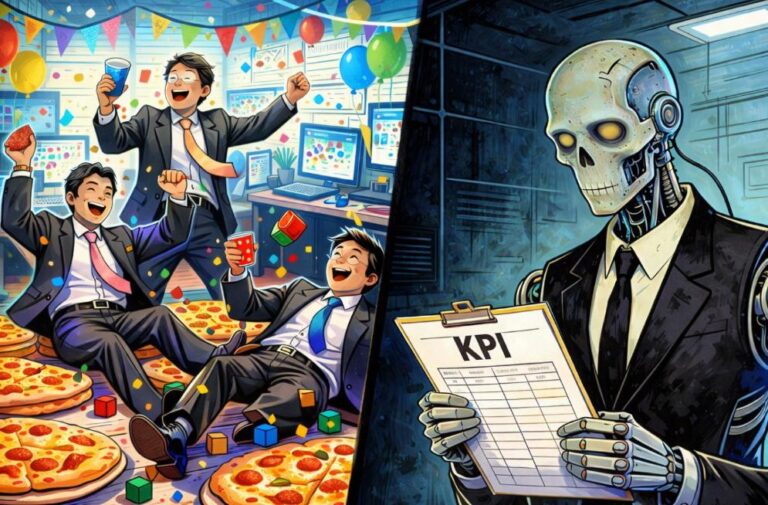
NightForge had a highly informal culture. Employees wore whatever they wanted, worked flexible hours and often stayed late voluntarily during “pizza brainstorm nights” to develop new ideas. There were beanbags and arcade machines throughout the office, and staff shared concepts, artwork and even major design decisions through Discord channels rather than formal meetings. Many employees called Rex Vale simply “Rex,” and his personal influence shaped the studio’s culture. Although this environment encouraged creativity, some outsiders viewed the company as disorganized and lacked professionalism.
In 2026, Night Forge was acquired by Vortexis Technologies, a global tech giant seeking to expand into the gaming market. Vortexis believed that NightForge had strong intellectual property but weak internal systems. Soon after the acquisition, Vortexis introduced fixed office hours, monthly performance reviews, key performance indicators (KPIs), formal departmental structures, and stricter reporting lines. Staff were told that all new game ideas had to pass through management approval procedures before development could begin. Senior managers from Vortexis also discouraged the use of Discord for decision-making and replaced it with official project management software.
Rex Vale remained at NightForge after the takeover, but his role changed significantly. He now had to report to Vortexis’s divisional vice president and could no longer approve projects independently. Tensions quickly emerged between long-serving designers and the new management team. Two senior game designers resigned, claiming that the new systems slowed innovation and damaged the creative identity of the business. However, Vortexis argued that tighter controls were necessary to reduce production delays, improve accountability, and make NightForge’s future game releases more predictable and profitable.
QUESTIONS: NightForge Studios
- State and explain two pieces of evidence that support the idea of an “informal culture” at Nightforge Studios [4]
- Define organizational culture [2]
- Outline two characteristics of NightForge’s organizational culture before the takeover [4]
- Describe two changes to organizational culture introduced by Vortexis Technologies [4]
- Explain one advantage and one disadvantage of a highly informal organizational culture for a business like NightForge. [4]
- Explain how NightForge’s original culture may have motivated employees. [4]
- Analyse how the change in leadership style after the takeover may have affected decision-making within NightForge. [4]
- Discuss the extent to which the cultural changes at NightForge were necessary for long-term success. [10]
Culture Clash: "things have changed"

Culture Clash: Case Study
FreshMart, a fast-growing US-based retail chain known for its data-driven approach and aggressive expansion, pursued international growth through a joint venture with TradKart, a family-owned supermarket chain in India. The merger aimed to combine FreshMart’s global supply chain expertise with TradKart’s understanding of local consumer preferences. It transpired that not a lot of research was done on Indian business culture in advance! The focus of the deal was instead the basic viability and ‘numbers side’.
However, tensions quickly emerged as FreshMart introduced centralized management and strict performance targets, clashing with TradKart’s relationship-based and decentralized culture. A change in leadership at FreshMart intensified the situation, as the new CEO pushed for rapid standardization across all stores. The US workers were also quite unfamiliar with the legal processes, which slowed down progress and caused uncertainty!
This disregarded local shopping habits, such as preference for smaller, frequent purchases and personalized customer service. As the firms attempted to scale operations, disagreements over management styles, employee expectations, and customer engagement grew. Ultimately, the partnership dissolved, highlighting how cultural differences and local unfamiliarity can undermine even strategically sound mergers.
US managers also wanted to introduce new technology, but some Indian managers fought against it! They said they had no problems with the existing technology and could not see a benefit!
QUESTIONS: Culture clash
- Identify two strategies FreshMart could have used to better understand Indian business culture before the merger. [2]
- Explain one reason why introducing centralized management caused conflict in this case. [2]
- Outline one-way improved communication could have reduced tensions between managers. [4]
- Analyse how the barriers to communication could be overcome? [6]
IB BM Unit 2.5 Organisational Culture (HL)
Understanding Organizational Culture: A Key to IB Business Management Success (Unit 2.5 HL)
Organizational culture lies at the heart of IB Business Management, particularly in Unit 2.5 (HL). It refers to the shared values, beliefs, norms, and behaviours that shape how people within a business think, act, and interact. Far beyond written policies, culture is what defines “how things are done around here”—often invisibly, yet powerfully.
Across the world, organizational culture takes dramatically different forms. In many Japanese firms, for instance, long working hours, deep loyalty, and group harmony are embedded expectations. Employees often stay late not because they must, but because leaving early may signal a lack of commitment. In contrast, businesses in parts of the Middle East may reflect more autocratic leadership cultures, where hierarchy is clear, decision-making is centralized, and authority is rarely challenged.
Meanwhile, in Scandinavian countries such as Norway, Sweden, and Finland, workplace cultures tend to emphasize collaboration, equality, and consensus decision-making. Flat organizational structures and open dialogue are common, with employees encouraged to contribute ideas regardless of rank. These contrasting examples highlight how culture shapes leadership styles, communication patterns, and employee motivation.
For IB students, understanding organizational culture is essential because it directly influences key areas of the syllabus, including:
- Leadership and management styles
- Employee motivation and engagement
- Communication and decision-making processes
- Resistance to change and organizational performance
Cultural differences can also lead to cultural clashes, particularly during mergers, acquisitions, or periods of rapid growth—an important HL concept. When organizations with different values and practices come together, misunderstandings and conflict can arise, affecting productivity and morale.
Modern global businesses must therefore actively manage and adapt their cultures. Companies like Google or Amazon, for example, have faced scrutiny over workplace expectations, employee voice, and internal norms—demonstrating that culture is not static, but constantly evolving.
By exploring real-world examples of organizational culture across different regions, IB Business Management students gain deeper insight into how businesses operate in diverse contexts. This not only strengthens their understanding of Unit 2.5, but also enhances their ability to analyse, evaluate, and apply concepts in exams.