
IB ECONOMICS Real world examples (rwe's)
Need some real-world examples for IB Economics?
IB Economics RWE’s: Understanding Merit Goods Through South Korea’s Green Revolution
In the IB Economics syllabus, applying theoretical knowledge to real-life policy is what sets excellent answers apart. That’s where IB Economics real world examples (RWE’s) come into play. These examples not only demonstrate key concepts but also make essays, evaluations, and IA investigations more compelling. South Korea’s Green New Deal is a superb IB Economics RWE, especially when viewed through the lens of merit goods. It shows how governments step in to encourage the consumption and production of goods that offer significant social benefits—especially when the free market underprovides them.
Green New Deal (South Korea): Merit Goods Policy
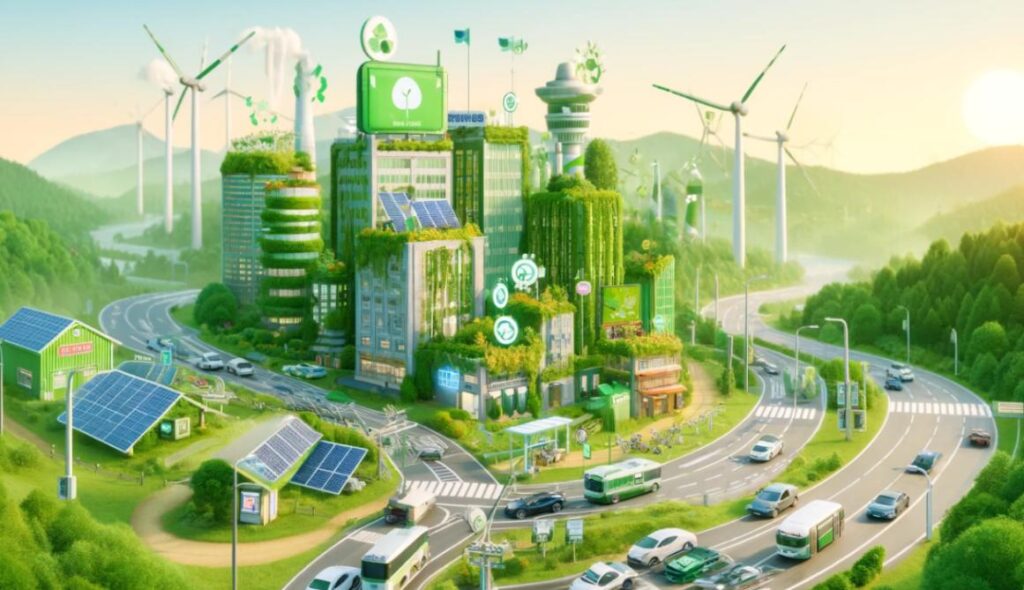
The Green New Deal in South Korea is an outstanding example of a merit goods policy. By investing in green energy, digital infrastructure, and environmental restoration, the government sought to promote goods and services that provide positive externalities—benefits that the market alone would fail to consider adequately.
Background Information
Introduced in 2020 as a response to both climate change and post-COVID recovery, South Korea’s Green New Deal formed a key pillar of the broader “Korean New Deal” launched by President Moon Jae-in. The initiative committed over 70 trillion won (~US$60 billion) to clean energy, electric mobility, green buildings, and digital transformation by 2025. Its objective was twofold: reduce greenhouse gas emissions and modernize the economy. This was especially urgent as South Korea had been one of the most fossil-fuel-reliant economies in the OECD. The policy also aimed to boost employment and prepare the country for a sustainable future.
Economic Theory and Policy Objectives
In IB Economics, merit goods are those that generate greater social benefits than private individuals would normally factor into their decisions—due to information failure, short-termism, or external benefits. Green infrastructure, renewable energy, and environmental research fall into this category because their long-run social benefits—like cleaner air, reduced climate risk, and improved public health—far outweigh the immediate private incentives to invest in them. South Korea’s Green New Deal used government spending and investment incentives to boost the consumption and production of these merit goods. It also attempted to internalize positive externalities and address market failure, while shifting behaviour toward sustainable choices.
Policy Evaluation
South Korea’s Green New Deal created momentum for environmental reform and improved global perception of Korea’s climate commitments. It supported innovation and green jobs, particularly in renewable energy and EV infrastructure. However, the policy was criticised for underdelivering on energy transition promises. A large share of funding went to digital infrastructure, which—while valuable—did not directly reduce emissions. There were also unintended consequences: resistance from fossil fuel sectors, unclear regulatory frameworks, and minimal support for carbon pricing. Despite these tensions, the Green New Deal remains a valuable step toward reshaping merit goods consumption and embedding sustainability into long-term economic planning.
Learn with IB Economics RWE’s
This resource was created for IB Economics students and teachers looking to enhance learning through IB Economics real world examples. South Korea’s Green New Deal is a fantastic IB Economics RWE that shows how governments support merit goods and positive externalities. Whether you’re writing your IA or preparing for Paper 1, real-world examples like this help elevate your analysis. You don’t need to know every policy, but including a few strong RWE’s will boost your understanding, confidence, and grades across the IB Economics course.
IB Economics RWE Scorecard: Green New Deal (South Korea)
| Category | Score (/100) | Symbol Representation |
|---|---|---|
| 53 | ||
| 73 | ||
| 78 | ||
| 79 | ||
| 82 |
Got any other useful sites or pages for IB Economics?
A complete set of IB Economics teaching / revision resources: https://ibmonkeybusiness.site/ib-economics-resources/
Key terms / vocabulary list / glossary for IB Economics: https://ibmonkeybusiness.site/ib-economics-key-terms-glossary/
Want to broaden your horizons with some wider reading?: https://www.bbc.com/news/business/economy
Here’s a link to another great partner website: https://thecuriouseconomist.com/
IB Economics Real-World Examples (RWEs): Where Theory Meets Reality
Welcome to the ultimate hub for IB Economics real-world examples (RWEs)—where theory meets reality. Whether you’re analyzing inflation, market failures, or global trade, real-world examples (RWEs) are essential for scoring top marks in IB Economics. Economics isn’t just about models and diagrams; it’s about understanding how policy decisions shape our daily lives, businesses, and entire countries. If you want to achieve a Level 7 and master exam technique, you must know a range of real-world examples (RWEs) to justify your answers—especially in Paper 3’s 10-mark policy recommendation question. Let’s explore how microeconomics, macroeconomics, and international trade play out in real time.
Microeconomics: The Power of Supply and Demand
Ever wondered why iPhones sell out instantly, or why concert tickets for artists like Taylor Swift skyrocket in price? This is IB Economics real-world examples (RWEs) in action. The law of supply and demand explains how firms price their products, why some brands hold monopoly power, and how government policy intervenes when markets become unfair. Rent controls in New York, price ceilings on energy in the UK, and minimum wage laws in Germany are all real-world examples (RWEs) of governments stepping in to correct market distortions. If you’re recommending policy solutions in the exam, strong exam technique requires backing up your analysis with real-world examples (RWEs).
Macroeconomics: Inflation, Interest Rates, and Government Debt
Macroeconomics isn’t just about GDP numbers—it’s about policies that impact millions of lives. Post-pandemic, we saw one of the best IB Economics real-world examples (RWEs) of inflation control. Central banks worldwide, from the U.S. Federal Reserve to the Bank of England, raised interest rates to slow down overheating economies. Countries like Argentina and Turkey struggle with hyperinflation, while Japan faces long-term deflation—both cases show why policy decisions matter. Meanwhile, government debt is skyrocketing. The World Bank reports that global debt levels are at record highs, forcing policymakers to rethink taxation and spending.
Will Debt Collapse Economies?
One of the biggest policy debates today is whether rising government debt will lead to economic collapse. The U.S. national debt has surpassed $30 trillion, and developing countries like Sri Lanka have defaulted on their loans. If debt spirals out of control, interest rates rise, currencies weaken, and economies crash. Is this the inevitable result of poor policy decisions? The International Monetary Fund (IMF) warns that unsustainable debt could trigger global recessions, making fiscal policy one of the most critical economic tools in the 21st century.
Trade: Globalization, Fast Fashion, and the Debt Trap
International trade connects the world, but it also creates economic winners and losers. The fast fashion industry thrives on cheap labor from developing countries, highlighting how firms use comparative advantage. But globalization isn’t always beneficial—some countries fall into a “debt trap,” borrowing billions for infrastructure projects they can’t repay. Sri Lanka’s recent debt crisis, where unsustainable borrowing led to an economic collapse, is a perfect IB Economics real-world example (RWE) of unsound trade and fiscal policy. Governments must balance trade openness with protective measures like tariffs and subsidies, making policy decisions critical for sustainable growth.
Why You Need Real-World Examples (RWEs) for Paper 3
If you want to ace IB Economics Paper 3, strong exam technique is essential—especially for the 10-mark policy recommendation question. Examiners expect students to justify their policy choices with concrete evidence. Whether it’s inflation control, government intervention, or trade protection, the best answers connect policy theory to real-world examples (RWEs). If you’re aiming for a Level 7, your exam technique must include well-structured, policy-driven answers with precise real-world examples (RWEs).
Keep exploring, keep questioning, and apply real-world examples (RWEs) to every concept you study. Economics is happening around you—understand it, and you’ll master IB Economics.
