
IB Business Management
Business Management Toolkit (BMT)
STEEPLE analysis
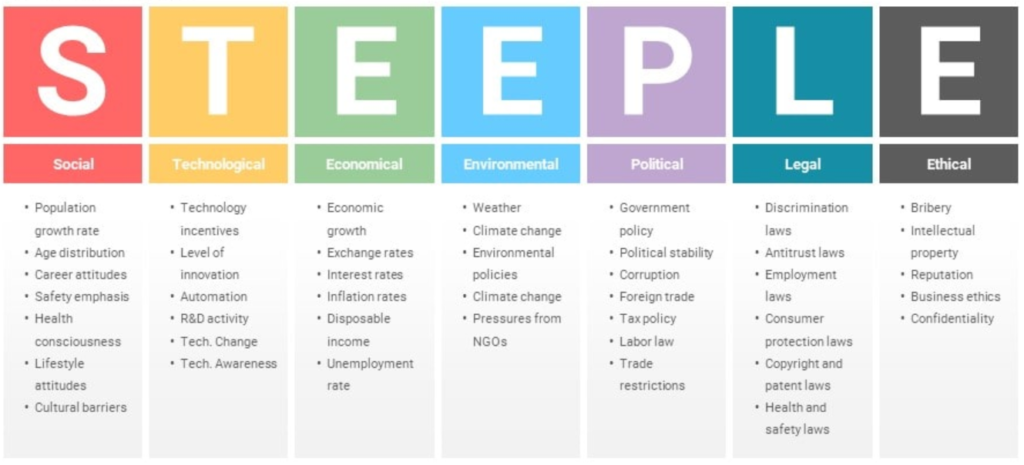
What is a STEEPLE analysis?
A STEEPLE analysis is a strategic tool used to evaluate Social, Technological, Economic, Environmental, Political, Legal, and Ethical external factors affecting a business. For example, a renewable energy company like Tesla benefits from Technological advances in battery efficiency and Environmental concerns driving demand for clean energy. However, it must navigate Political regulations on energy subsidies and Economic factors like fluctuating material costs. This tool, part of the IB Business Management toolkit, helps businesses anticipate external challenges and opportunities.
A STEEPLE analysis helps businesses assess external factors that could impact their operations, strategy, and decision-making. It is used for market analysis, risk management, and identifying opportunities or threats in areas like regulations, technology, and social trends.
STEEPLE EXAMPLE #1 Reliance-Disney Joint Venture: Transforming India’s Media Landscape
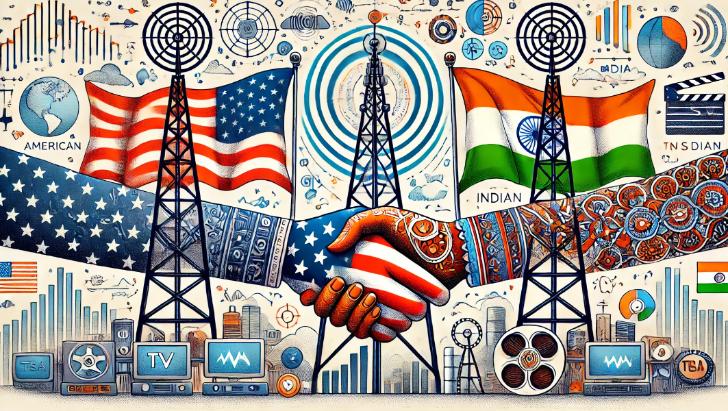
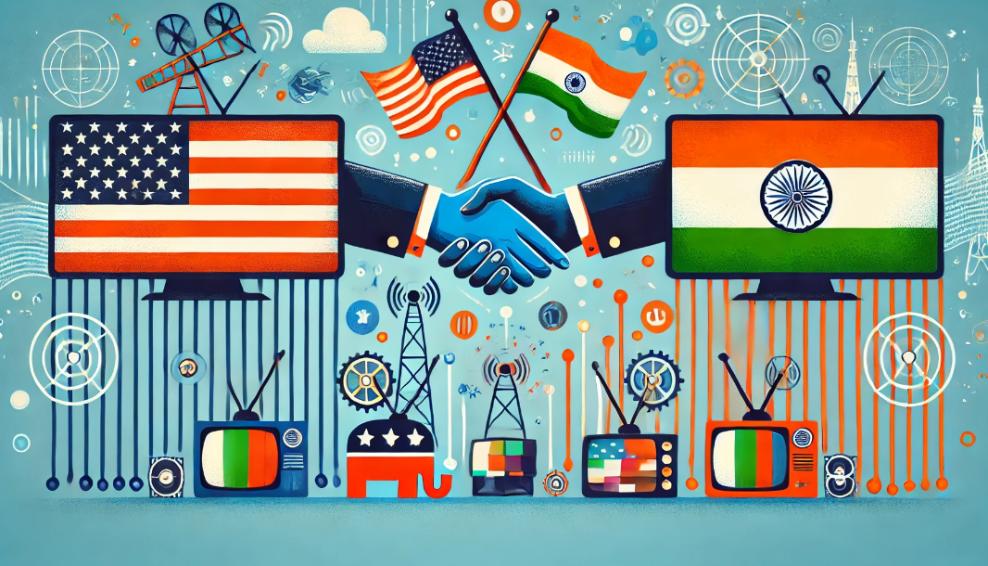
The recent joint venture between Reliance Industries and Disney will reshape India’s entertainment industry, merging Disney’s huge catalog of content with a uniquely Indian twist.
This collaboration will deliver a tailored viewing experience to Indian viewers. Recognizing the importance of local appeal, both companies plan to adapt Disney’s content, steering clear of themes that may not align with India’s often conservative social norms. This approach seeks to respect Indias distinctive cultural norms!
Socially, Indian government are concerned that (just like Netflix) the popularity of media can be too great! How so? Well, Netflix as a concept was so successful, that the business name has entered everyday usage! Are American’s better off or worse off with Netflix? Socially, they seem happier with endless hours of strong content, but economically and socially, does this endless screen time promote social well-being?
From an economic perspective, the venture promises benefits, (jobs creation in the digital production and media services sector in India). However, there are fears over competition (with local services essentially being destroyed).
The combined influence of Disney and Reliance hints at an ‘oligopolistic’ market structure, where high barriers for new entrants could lead to a landscape dominated by a few major players. This trend may not only limit consumer choice but could also drive up prices (in the long run), reducing diversity in the media and diminishing the range of voices (plurality) in the Indian entertainment industry. Political concerns are also important as the business oligopoly can turn into a political tool where companies are allowed to become too large!
This expansion is designed to close the Indian digital divide, offering streaming services to audiences who may have limited access to traditional media. However, there are new challenges around data privacy and cybersecurity, especially in rural regions where security measures are often less robust. Privacy advocates warn that without rigorous safeguards, this connectivity push could expose vulnerabilities, potentially affecting millions of users.
Environmentally, the anticipated spike in digital consumption associated with this partnership could strain India’s data infrastructure, escalating both energy consumption and emissions from data centers. As streaming becomes more widespread, the demand for energy-intensive digital services could pose sustainability challenges. Addressing these environmental impacts may require innovative solutions, such as investing in renewable energy sources for data centers or implementing energy-efficient technologies, to mitigate the environmental footprint.
On the political front, the partnership aligns well with India’s goals for digital growth, resonating with government initiatives aimed at fostering connectivity and digital inclusion. Yet, as foreign media permeates the local market, regulatory oversight on content representation may intensify. Indian authorities have shown an increasing willingness to implement content regulations that uphold traditional values, and this trend may continue as foreign media conglomerates expand their reach. The partnership therefore sits at the intersection of promoting digital advancement while navigating the intricate balance of cultural sensitivity, economic inclusivity, and diversity.
Questions (STEEPLE analysis)
- Using the case study above, create a STEEPLE analysis [8]
- Analyse which seem to be the greatest potential area of concern for the Reliance – Disney merger [5]
- Analyse who is the greater beneficiary (potentially) in this deal [6]
STEEPLE analysis beyond the IB Business Management course
The STEEPLE analysis is a vital tool in the IB Business Management Toolkit (BMT) that helps businesses assess external factors that could impact their operations and decision-making. STEEPLE stands for Social, Technological, Economic, Environmental, Political, Legal, and Ethical factors. By analyzing these areas, businesses can anticipate risks, identify opportunities, and develop strategies that align with external conditions.
For example, a global retailer considering expansion into a new market would use STEEPLE analysis to evaluate key challenges and advantages. Social factors such as consumer preferences and cultural attitudes toward shopping are crucial. The company would also examine Technological advancements like e-commerce trends and digital payment systems. Economic conditions, including inflation rates and consumer spending power, would determine financial feasibility. From an Environmental standpoint, the business would assess sustainability regulations and carbon footprint expectations. Political stability and trade policies impact long-term viability, while Legal factors, such as labor laws and taxation policies, shape operational strategy. Finally, Ethical considerations like fair trade practices and corporate social responsibility affect brand reputation.
A real-world example is Tesla, which uses STEEPLE analysis to navigate global markets. Tesla considers Political regulations on electric vehicles, Technological advancements in battery efficiency, and Economic shifts in raw material costs. The company also evaluates Environmental concerns, such as emissions policies, and Legal factors, including international trade laws.
STEEPLE analysis helps businesses assess potential risks and benefits before launching a product, entering a market, or making strategic decisions. It is a crucial tool for risk management and long-term sustainability. For more details, visit Investopedia, Harvard Business Review, and Save My Exams.