
IB ECONOMICS Real world examples (rwe's)

Need some real-world examples for IB Economics?
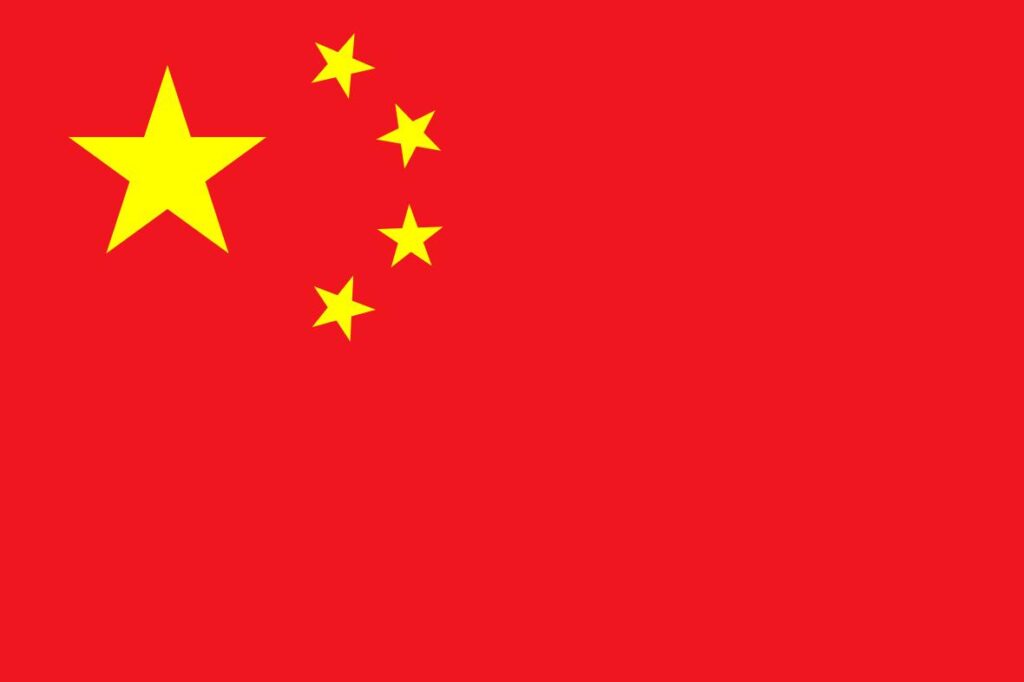
Exploring IB Economics RWE’s Through China’s Reserve Requirement Ratio (RRR) Cuts
Real-world examples (RWE’s) are essential for bringing IB Economics theory to life. China’s frequent use of Reserve Requirement Ratio (RRR) cuts offers a compelling look into monetary policy, liquidity management, and how governments seek to stabilize growth in a large, rapidly evolving economy. These RWE’s help IB students explore the real-world balancing act between inflation, unemployment, credit availability, and financial risk.
China’s RRR Cuts: Monetary Policy to Stimulate Lending and Growth
The Reserve Requirement Ratio (RRR) is the percentage of deposits that commercial banks are required to hold in reserve. Cutting the RRR frees up funds, allowing banks to lend more. In China, RRR cuts are a key expansionary monetary policy tool, especially during economic slowdowns or external shocks such as COVID-19 or global trade tensions.
Background Information
The People’s Bank of China (PBoC) has frequently adjusted the RRR over the past decade to fine-tune liquidity. Notably:
In 2020, as COVID-19 hit, the PBoC cut the RRR to support economic recovery.
In 2022 and 2023, further cuts aimed to counter slowing GDP growth, real estate instability, and weak domestic demand.
As of early 2024, the PBoC continued to lower the RRR to around 7%, injecting hundreds of billions of yuan into the financial system.
The objectives were to:
Increase liquidity in the banking system
Support small- and medium-sized enterprises (SMEs)
Stimulate domestic consumption and investment
Offset weak external demand and export declines
Economic Theory and Policy Aims
China’s RRR cuts are rooted in Keynesian demand management theory, where increasing the supply of loanable funds encourages investment, boosts consumption, and shifts Aggregate Demand (AD) rightward.
The policy:
Enhances monetary transmission by freeing up credit
Reduces borrowing costs for firms and households
Helps stabilize employment during downturns
Aims to support long-term growth targets without over-relying on fiscal stimulus
However, frequent RRR cuts also raise concerns about over-leverage, zombie firms, and asset bubbles, particularly in real estate.
Evaluation of the Policy
Short-term outcomes have largely been positive:
Increased bank lending to targeted sectors
Sustained economic growth, even amid global volatility
Helped offset export weakness and real estate slowdowns
But there are risks:
Structural issues in China’s economy—like falling productivity and demographic decline—cannot be solved through liquidity alone
Household confidence remains fragile despite easier credit
Critics argue that moral hazard may grow as firms rely on easy money
The PBoC has attempted to balance growth stimulation with financial discipline, often combining RRR cuts with targeted lending windows and macroprudential oversight.
Learn with IB Economics RWE’s
China’s RRR cuts are an ideal IB Economics RWE to explore monetary policy tools beyond interest rates, especially in centrally directed economies. They’re relevant for topics like:
Monetary policy effectiveness
Credit creation and liquidity
Development strategies
The role of central banks in mixed economies
This example also encourages students to think critically about short-term stimulus vs. long-term reform, and whether central bank tools can solve structural inefficiencies.
IB Economics RWE Scorecard: China’s RRR Cuts
| Category | Score (/100) | Symbol Representation |
|---|---|---|
| 💸 Cost Effectiveness | 65 | 💸💸💸💸 |
| ✅ Policy Success | 70 | ✅✅✅✅ |
| 👍 Public Support | 60 | 👍👍👍 |
| ♻️ Long-term Viability | 50 | ♻️♻️♻️ |
| 📊 Macroeconomic Impact | 75 | 📊📊📊📊 |
Got any other useful sites or pages for IB Economics?
A complete set of IB Economics teaching / revision resources: https://ibmonkeybusiness.site/ib-economics-resources/
Key terms / vocabulary list / glossary for IB Economics: https://ibmonkeybusiness.site/ib-economics-key-terms-glossary/
Want to broaden your horizons with some wider reading?: https://www.bbc.com/news/business/economy
Here’s a link to another great partner website: https://thecuriouseconomist.com/
IB Economics Real-World Examples (RWEs): Where Theory Meets Reality
Welcome to the ultimate hub for IB Economics real-world examples (RWEs)—where theory meets reality. Whether you’re analyzing inflation, market failures, or global trade, real-world examples (RWEs) are essential for scoring top marks in IB Economics. Economics isn’t just about models and diagrams; it’s about understanding how policy decisions shape our daily lives, businesses, and entire countries. If you want to achieve a Level 7 and master exam technique, you must know a range of real-world examples (RWEs) to justify your answers—especially in Paper 3’s 10-mark policy recommendation question. Let’s explore how microeconomics, macroeconomics, and international trade play out in real time.
Microeconomics: The Power of Supply and Demand
Ever wondered why iPhones sell out instantly, or why concert tickets for artists like Taylor Swift skyrocket in price? This is IB Economics real-world examples (RWEs) in action. The law of supply and demand explains how firms price their products, why some brands hold monopoly power, and how government policy intervenes when markets become unfair. Rent controls in New York, price ceilings on energy in the UK, and minimum wage laws in Germany are all real-world examples (RWEs) of governments stepping in to correct market distortions. If you’re recommending policy solutions in the exam, strong exam technique requires backing up your analysis with real-world examples (RWEs).
Macroeconomics: Inflation, Interest Rates, and Government Debt
Macroeconomics isn’t just about GDP numbers—it’s about policies that impact millions of lives. Post-pandemic, we saw one of the best IB Economics real-world examples (RWEs) of inflation control. Central banks worldwide, from the U.S. Federal Reserve to the Bank of England, raised interest rates to slow down overheating economies. Countries like Argentina and Turkey struggle with hyperinflation, while Japan faces long-term deflation—both cases show why policy decisions matter. Meanwhile, government debt is skyrocketing. The World Bank reports that global debt levels are at record highs, forcing policymakers to rethink taxation and spending.
Will Debt Collapse Economies?
One of the biggest policy debates today is whether rising government debt will lead to economic collapse. The U.S. national debt has surpassed $30 trillion, and developing countries like Sri Lanka have defaulted on their loans. If debt spirals out of control, interest rates rise, currencies weaken, and economies crash. Is this the inevitable result of poor policy decisions? The International Monetary Fund (IMF) warns that unsustainable debt could trigger global recessions, making fiscal policy one of the most critical economic tools in the 21st century.
Trade: Globalization, Fast Fashion, and the Debt Trap
International trade connects the world, but it also creates economic winners and losers. The fast fashion industry thrives on cheap labor from developing countries, highlighting how firms use comparative advantage. But globalization isn’t always beneficial—some countries fall into a “debt trap,” borrowing billions for infrastructure projects they can’t repay. Sri Lanka’s recent debt crisis, where unsustainable borrowing led to an economic collapse, is a perfect IB Economics real-world example (RWE) of unsound trade and fiscal policy. Governments must balance trade openness with protective measures like tariffs and subsidies, making policy decisions critical for sustainable growth.
Why You Need Real-World Examples (RWEs) for Paper 3
If you want to ace IB Economics Paper 3, strong exam technique is essential—especially for the 10-mark policy recommendation question. Examiners expect students to justify their policy choices with concrete evidence. Whether it’s inflation control, government intervention, or trade protection, the best answers connect policy theory to real-world examples (RWEs). If you’re aiming for a Level 7, your exam technique must include well-structured, policy-driven answers with precise real-world examples (RWEs).
Keep exploring, keep questioning, and apply real-world examples (RWEs) to every concept you study. Economics is happening around you—understand it, and you’ll master IB Economics.