
IB ECONOMICS Real world examples (rwe's)

Need some real-world examples for IB Economics?
IB Economics RWE’s: Supply-Side Policy and Germany’s Skilled Workforce Strategy
One of the most effective ways to elevate your answers in IB Economics is through the smart use of IB Economics real world examples (RWE’s). They help bring complex economic theory to life, enabling you to apply, evaluate, and impress examiners with precise context. Germany’s investment in education and training is a standout IB Economics RWE, particularly in the category of supply-side policy. It shows how targeted investment in human capital can strengthen productivity, reduce structural unemployment, and sustain long-term competitiveness.
Investment in Education and Training (Germany): Supply-Side Policy
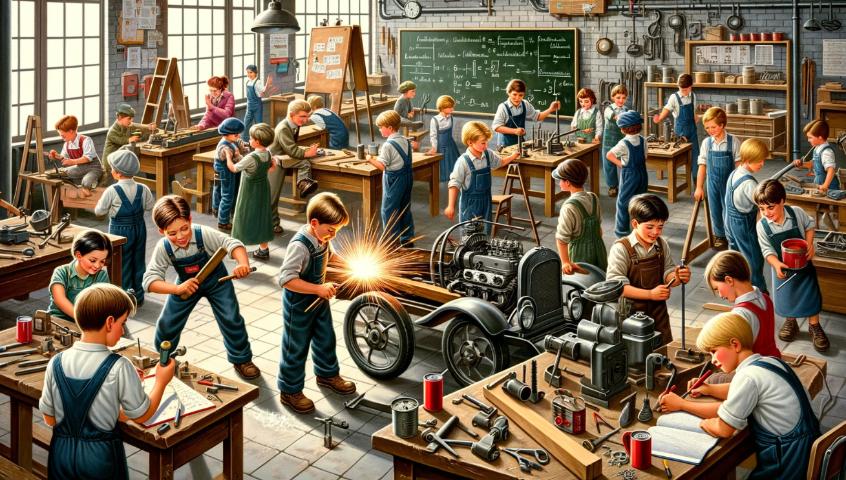
Germany’s policy centres on enhancing human capital through a blend of academic education, vocational training, and lifelong learning programmes. Its renowned “dual education system” combines classroom instruction with hands-on apprenticeships, supported by public funding and strong collaboration with industry. Recent initiatives have focused on modernising curricula for digital skills, renewable energy technologies, and advanced manufacturing.
Background Information
Germany’s dual training system has existed for decades, but recent reforms have boosted funding and expanded access to emerging sectors. The policy responds to challenges such as an ageing population, skills shortages in STEM fields, and the need to adapt to Industry 4.0. Public investment supports state-run vocational schools, while firms receive incentives to provide apprenticeship places. These measures aim to ensure a steady supply of skilled labour, improve productivity, and maintain Germany’s position as a high-value exporter.
Economic Theory and Policy Objectives
In IB Economics, supply-side policies aim to shift the long-run aggregate supply (LRAS) curve to the right by increasing the economy’s productive capacity. Germany’s investment in education and training is an interventionist supply-side policy, directly improving the quality of labour—one of the key factors of production. By reducing skill mismatches, the policy lowers structural unemployment and increases labour market flexibility. Objectives include enhancing innovation, sustaining export competitiveness, and ensuring high employment levels in the face of technological change and demographic shifts.
Policy Evaluation
The policy has helped Germany maintain one of the lowest youth unemployment rates in the EU and a reputation for a highly skilled workforce. Productivity growth in manufacturing and engineering remains strong, and the model is widely admired internationally. However, critics point to high costs, regional disparities in training quality, and difficulties in adapting the system rapidly to disruptive technologies. Additionally, reliance on employer participation means economic downturns can reduce apprenticeship opportunities. Despite these challenges, the policy is widely regarded as a cornerstone of Germany’s economic resilience.
Learn with IB Economics RWE’s
This page is designed for IB Economics students and teachers who want to connect real policy examples to the course syllabus. Germany’s investment in education and training is an excellent IB Economics RWE for studying supply-side policy, human capital development, and structural reform. These IB Economics real world examples bring clarity and credibility to your work. You don’t need to learn them all—but knowing a few like this will boost your confidence, deepen your understanding, and make your evaluation and application skills truly stand out in your IA and exams.
IB Economics RWE Scorecard: Investment in Education and Training (Germany)
| Category | Score (/100) | Symbol Representation |
|---|---|---|
| 💸 Cost Effectiveness | 52 | 💸💸💸 |
| ✅ Policy Success | 64 | ✅✅✅✅ |
| 👍 Public Support | 72 | 👍👍👍👍 |
| ♻️ Long-term Viability | 82 | ♻️♻️♻️♻️ |
| 📊 Macroeconomic Impact | 69 | 📊📊📊📊 |
Got any other useful sites or pages for IB Economics?
A complete set of IB Economics teaching / revision resources: https://ibmonkeybusiness.site/ib-economics-resources/
Key terms / vocabulary list / glossary for IB Economics: https://ibmonkeybusiness.site/ib-economics-key-terms-glossary/
Want to broaden your horizons with some wider reading?: https://www.bbc.com/news/business/economy
Here’s a link to another great partner website: https://thecuriouseconomist.com/
IB Economics Real-World Examples (RWEs): Where Theory Meets Reality
Welcome to the ultimate hub for IB Economics real-world examples (RWEs)—where theory meets reality. Whether you’re analyzing inflation, market failures, or global trade, real-world examples (RWEs) are essential for scoring top marks in IB Economics. Economics isn’t just about models and diagrams; it’s about understanding how policy decisions shape our daily lives, businesses, and entire countries. If you want to achieve a Level 7 and master exam technique, you must know a range of real-world examples (RWEs) to justify your answers—especially in Paper 3’s 10-mark policy recommendation question. Let’s explore how microeconomics, macroeconomics, and international trade play out in real time.
Microeconomics: The Power of Supply and Demand
Ever wondered why iPhones sell out instantly, or why concert tickets for artists like Taylor Swift skyrocket in price? This is IB Economics real-world examples (RWEs) in action. The law of supply and demand explains how firms price their products, why some brands hold monopoly power, and how government policy intervenes when markets become unfair. Rent controls in New York, price ceilings on energy in the UK, and minimum wage laws in Germany are all real-world examples (RWEs) of governments stepping in to correct market distortions. If you’re recommending policy solutions in the exam, strong exam technique requires backing up your analysis with real-world examples (RWEs).
Macroeconomics: Inflation, Interest Rates, and Government Debt
Macroeconomics isn’t just about GDP numbers—it’s about policies that impact millions of lives. Post-pandemic, we saw one of the best IB Economics real-world examples (RWEs) of inflation control. Central banks worldwide, from the U.S. Federal Reserve to the Bank of England, raised interest rates to slow down overheating economies. Countries like Argentina and Turkey struggle with hyperinflation, while Japan faces long-term deflation—both cases show why policy decisions matter. Meanwhile, government debt is skyrocketing. The World Bank reports that global debt levels are at record highs, forcing policymakers to rethink taxation and spending.
Will Debt Collapse Economies?
One of the biggest policy debates today is whether rising government debt will lead to economic collapse. The U.S. national debt has surpassed $30 trillion, and developing countries like Sri Lanka have defaulted on their loans. If debt spirals out of control, interest rates rise, currencies weaken, and economies crash. Is this the inevitable result of poor policy decisions? The International Monetary Fund (IMF) warns that unsustainable debt could trigger global recessions, making fiscal policy one of the most critical economic tools in the 21st century.
Trade: Globalization, Fast Fashion, and the Debt Trap
International trade connects the world, but it also creates economic winners and losers. The fast fashion industry thrives on cheap labor from developing countries, highlighting how firms use comparative advantage. But globalization isn’t always beneficial—some countries fall into a “debt trap,” borrowing billions for infrastructure projects they can’t repay. Sri Lanka’s recent debt crisis, where unsustainable borrowing led to an economic collapse, is a perfect IB Economics real-world example (RWE) of unsound trade and fiscal policy. Governments must balance trade openness with protective measures like tariffs and subsidies, making policy decisions critical for sustainable growth.
Why You Need Real-World Examples (RWEs) for Paper 3
If you want to ace IB Economics Paper 3, strong exam technique is essential—especially for the 10-mark policy recommendation question. Examiners expect students to justify their policy choices with concrete evidence. Whether it’s inflation control, government intervention, or trade protection, the best answers connect policy theory to real-world examples (RWEs). If you’re aiming for a Level 7, your exam technique must include well-structured, policy-driven answers with precise real-world examples (RWEs).
Keep exploring, keep questioning, and apply real-world examples (RWEs) to every concept you study. Economics is happening around you—understand it, and you’ll master IB Economics.