
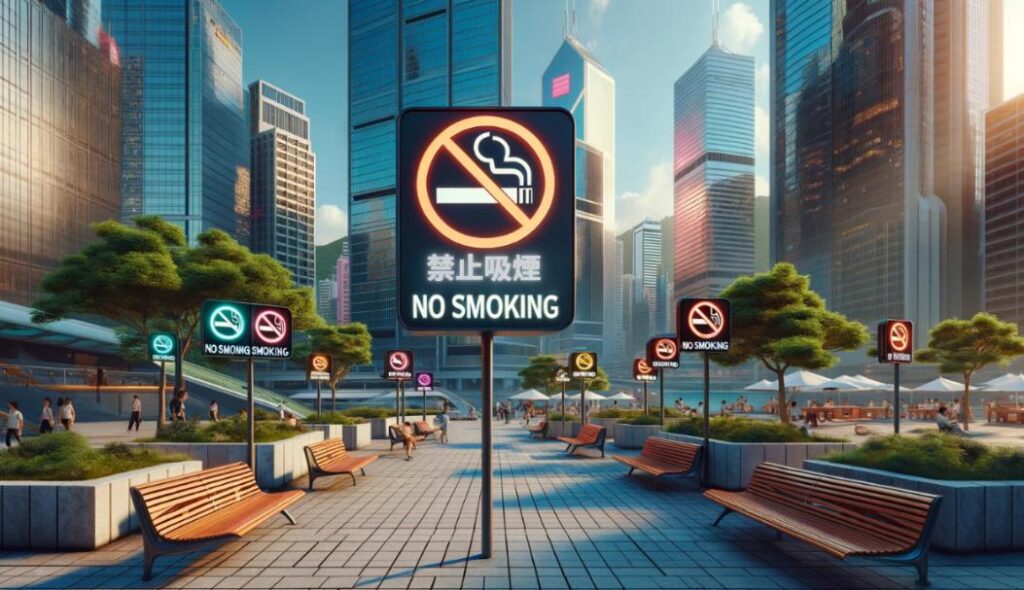

IB Economics RWE’s: Regulating Demerit Goods Through Hong Kong’s Public Smoking Ban
When studying IB Economics, it’s crucial to move from theory into application. That’s why IB Economics real world examples (RWE’s) are such valuable tools. They help students connect textbook concepts to actual government interventions. Hong Kong’s Smoking in Public Ban is a standout IB Economics RWE in the area of demerit goods. It shows how governments regulate consumption of products like tobacco, which cause harm to individuals and wider society. If you’re studying market failure, negative externalities, or government regulation, this is a model policy example to use.
Smoking in Public Ban (Hong Kong): Demerit Goods Policy
The Smoking in Public Ban in Hong Kong is a classic demerit goods policy. It targets the overconsumption of tobacco—a harmful product associated with addiction, long-term health damage, and significant negative externalities. By restricting where people can smoke, the government aims to reduce harm and shift social norms.
Background Information
Hong Kong’s public smoking ban began in 2007, prohibiting smoking in indoor public spaces including restaurants, bars, workplaces, and public transport. In subsequent years, the ban expanded to outdoor areas such as beaches, parks, and even pedestrian walkways. The policy was driven by growing public concern over secondhand smoke, increasing rates of respiratory illness, and the rising costs of tobacco-related healthcare. The law is enforced by the Tobacco Control Office and carries fines for violators. The ban is part of Hong Kong’s wider tobacco control strategy, which also includes taxation, health warnings, and youth education campaigns.
Economic Theory and Policy Objectives
In IB Economics, tobacco is classified as a demerit good—a product that is overconsumed in the free market due to information failure, addiction, or short-term decision-making. Smoking creates significant negative externalities, especially in the form of secondhand smoke, increased healthcare costs, and reduced workplace productivity. The aim of Hong Kong’s smoking ban is to reduce the spillover costs to non-smokers while shifting social norms and discouraging smoking through regulation. By restricting the places where smoking is permitted, the policy effectively reduces demand, internalises external costs, and increases awareness of the dangers of tobacco use.
Policy Evaluation
Hong Kong’s smoking ban has significantly reduced public exposure to secondhand smoke and shifted public attitudes. Compliance has generally been high, supported by clear enforcement and public support. However, some challenges persist: enforcement in crowded outdoor spaces can be inconsistent, and smoking continues in certain grey areas like private clubs or alleyways. Critics argue that bans alone are not sufficient and should be paired with stronger cessation support. Nonetheless, the ban has contributed to falling smoking rates and improved public health outcomes—making it a largely successful example of how government intervention can reduce the consumption of harmful, overused goods.
Learn with IB Economics RWE’s
This example is built for IB Economics students and teachers who want to apply theory to real-world case studies. Hong Kong’s Smoking in Public Ban is an excellent IB Economics RWE for understanding demerit goods, negative externalities, and regulation as government intervention. Whether you’re crafting a Paper 1 essay or building your IA, real world examples like this show how governments address market failure. You don’t need to memorise them all—but having a few like this will make your arguments stronger and more credible.
IB Economics RWE Scorecard: Smoking in Public Ban (Hong Kong)
| Category | Score (/100) | Symbol Representation |
|---|---|---|
 Cost Effectiveness (Column D) Cost Effectiveness (Column D) | 86 | |
 Policy Success (Column E) Policy Success (Column E) | 65 | |
 Public Support (Column F) Public Support (Column F) | 67 | |
 Long-term Viability (Column G) Long-term Viability (Column G) | 89 | |
 Macroeconomic Impact (Column H) Macroeconomic Impact (Column H) | 52 | |